
Flutter on Edge Robotics: Adapting UI Workloads to Jetson Thermal Pressure
by vmodal_ai dev.to
1 min read
Edge systems share a thermal and power envelope across inference, networking, video, and application services. The Flutter client should degrade gracefully when telemetry indicates resource pressure. Observe before adapting Collect temperature, throttling state, CPU/GPU use, memory pressure, inference latency, and frame age through supported interfaces. Do not infer thermal state from one slow fr…
More like this
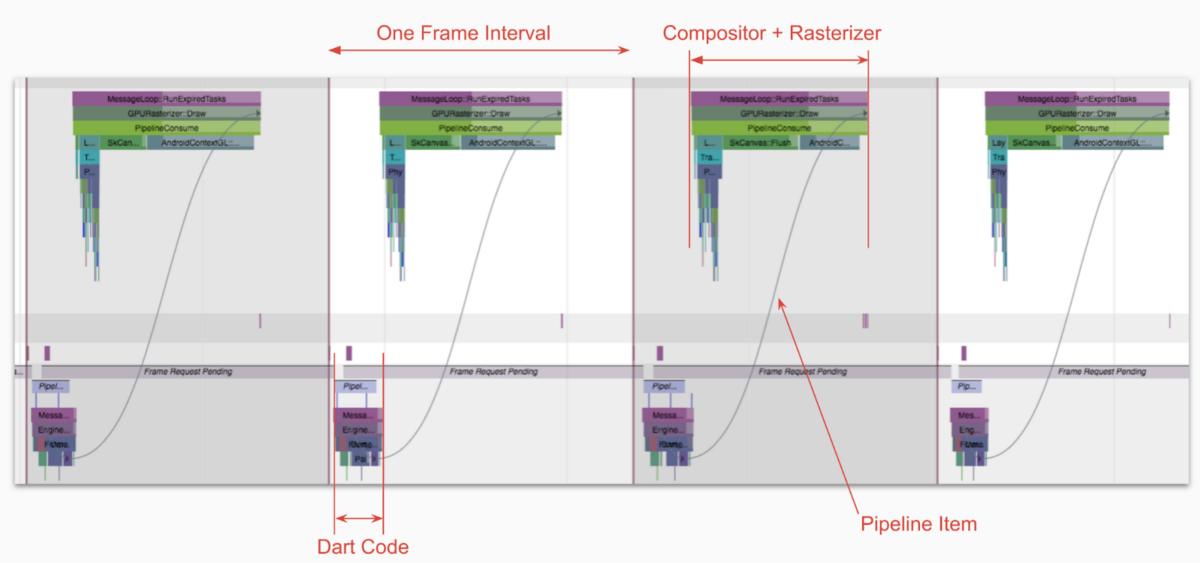 Article 13 min read
Profiling Flutter Applications Using the Timeline
by Chinmay Garde
Using the Timeline allows you to find and address specific performance issues in your application. It is also a great tool to identify the…
Read on medium.com Article 19 min read
In-App Purchases with Flutter: A Comprehensive Step-by-Step tutorial
by Mat
After my previous article on how to add payment gateway capabilities to your next Flutter app, I’m back today to show you how to add…
Read on medium.com- Article 4 min read
Flutter + NVIDIA Jetson: Designing a Low-Latency Robotics Gateway
by vmodal_ai
Flutter + NVIDIA Jetson: Designing a Low-Latency Robotics Gateway This advanced tutorial treats Flutter as the operator-facing presentation layer while wearable SDKs, Jetson services, ROS 2 nodes, and...
Read on dev.to - Article 2 min read
Observability for Flutter + Robotics + Edge AI Systems
by vmodal_ai
The problem A slow UI may be caused by Flutter rebuilds, a weak wireless link, a ROS queue, Jetson thermal throttling, or slow inference. Without correlated timestamps and IDs, teams guess instead of...
Read on dev.to


